The GenerIA Blog
When Your AI Vendor Becomes Your Competitor
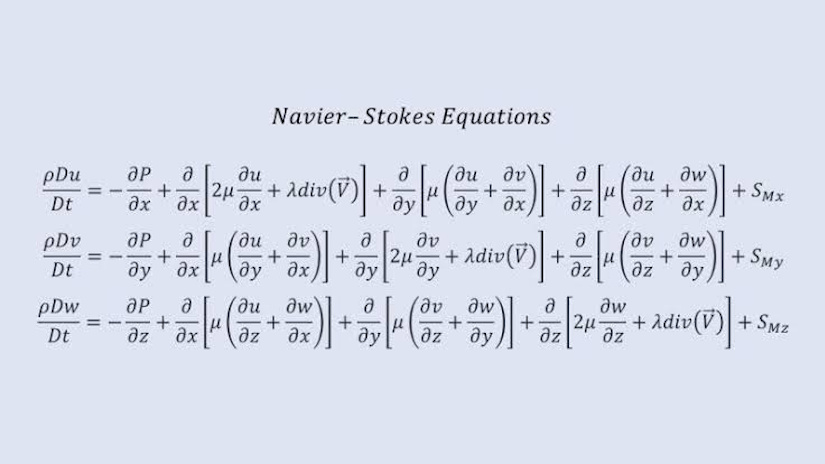
A mathematician spent a year on one of the hardest open problems in his field. He did the work inside Codex, OpenAI's coding agent. Days before he published, OpenAI published a competing result on the same problem, by the same uncommon route, backed by compute power he could never match.
On September 8, 2026, NYU mathematics professor Tristan Buckmaster released three proofs on the finite-time blowup problem in fluid dynamics, a work carried out with Levent Alpöge and assisted throughout by large language models. Alongside the mathematics, he published a statement describing something he wrote that he wished he did not have to raise at all: while the results were being finalized, he learned that information about his progress had reached OpenAI. Shortly after, OpenAI published a full proof of the Navier-Stokes existence and smoothness problem, one of the seven Millennium Prize problems, each carrying a one-million-dollar bounty from the Clay Mathematics Institute [1].
The facts are contested and will stay contested for some time. What is not contested is the shape of the exposure. And that shape has nothing to do with mathematics.
What is alleged and what is denied
Buckmaster's account, as reported by TechCrunch [2], is that his questions about when OpenAI's effort began and how much human direction it involved met shifting answers: a full team had been working the problem, an extraordinary volume of compute had been consumed and the first prompt went out only after word of his own work circulated. The route he and Alpöge had taken was one almost nobody was pursuing — not a direction a model reaches in days from a bare problem statement. When he proposed going public, he says OpenAI's mathematical research lead, Sébastien Bubeck, asked why he would want to ruin his career, then indicated he need not remain pleasant about it.
Bubeck calls the allegations false and inflammatory and says he acted within academic norms. OpenAI states that its effort began on September 1 after hearing a rumour, and that neither its researchers nor its agents saw the pair's work before publication.
Buckmaster is careful here. He has not seen the competing proof, does not know what the model did or whether his data played any role, and says plainly that he is accusing no one — only recording what he was told, and when. That restraint is what makes the episode instructive. Strip out every disputed claim and a structural fact remains standing.
Their model, their servers, their rules
Buckmaster and Alpöge worked inside Codex. Their draft proofs, their failed attempts, their working notes - the intellectual residue of a year of directed effort - accumulated inside a product operated by an organization that also competes in the same intellectual arena. OpenAI reserves the right to train on such interactions; users may opt out but the default runs the other way.
Note carefully what this means. Even if OpenAI's account is accurate in every particular, the researchers had no independent means of establishing that. They could not audit the boundary. They could not demonstrate that their material had stayed on their side of it. They were left holding an assurance and no instrument with which to test it.
An organization that cannot verify a boundary does not have a boundary. It has a promise. Promises are perfectly adequate right up to the moment interests diverge, and the entire lesson of this episode is that interests between a platform and its most sophisticated users diverge precisely when the work becomes valuable.
Almost nobody prices the risk of an AI they do not control
It is tempting to file this under academic drama. That would be a mistake, because the substance is entirely ordinary.
Very few organizations are holding a Millennium Prize problem in their session history. Nearly all of them are holding something a competitor would pay for. The pricing model that took three years to calibrate. The proprietary process documentation. The unreleased architecture. The client files. The acquisition memo. The regulatory submission that has not yet been filed. These are pasted into general-purpose assistants daily, by people acting in good faith, under terms almost nobody has read.
The exposure is not exotic. It is the default configuration of the modern knowledge-work stack, a stack in which the organization's most valuable non-public material is routed, unencrypted at the point of use and unverifiable thereafter, through infrastructure controlled by a third party whose commercial ambitions are broad and expanding.
The mathematician's advantage is that his dispute became visible. He had a publication date, a named counterparty and a research community capable of adjudicating priority. A mid-sized manufacturer whose process knowledge quietly improves a competitor's model gets none of that. It simply notices, eighteen months later, that its distinctiveness has thinned, and never learns why.
What sovereignty actually looks like
The correct response is not to withdraw from AI. Buckmaster and Alpöge reached their results with model assistance, and that is not incidental because the tools work. The response is to change what sits underneath them.
This is the entire reason GenerIA exists.
GenerIA AIs run where you decide. We builds bespoke professional AI systems that can be fully deployed on-premises, inside your own infrastructure. Not a private tenancy on someone else's cloud. Not a contractual assurance that your data is walled off. Your servers, your perimeter, your keys. The question of whether your material left the building is answered by architecture, not by a clause you have to trust.
Your data trains nothing but your own system. GenerIA has no aggregation business, no related consumer product to improve, no incentive structure that quietly benefits from what you feed it. Your process knowledge, your client files, your unreleased work... none of it becomes raw material for a model that will later serve someone else. There is no opt-out to find, because there is nothing to opt out of.
Your interests and ours are not in tension. GenerIA sells you a system. It does not sell what the system learns. That is a structural alignment, not a promise of good behaviour, and structural alignment is the only kind that survives the moment your work becomes valuable.
And none of this costs you capability. A purpose-built system, trained on your domain and running frugally on hardware you control, outperforms a general-purpose giant on the work that actually matters to your organization. Without requiring you to hand over your secrets to make it useful.
What that buys, in the end, is a thing no subscription tier offers at any price: the ability to put your most valuable material into an AI system and stop wondering where it goes.
Conclusion
Sovereignty: your data, your AI, your competitive advantage.
Sources
[1] Clay Mathematics Institute, Millennium Problems
[2] TechCrunch OpenAI fought dirty on career-making math problem, says NYU mathematician
References
Tristan Buckmaster,public statement accompanying the release of the proofs, September 8, 2026.
OpenAI,On the Navier-Stokes Millennium Prize Problem, September 2026.
OfficeChai,OpenAI's Sebastien Bubeck calls Tristan Buckmaster's claims "false and inflammatory", September 8, 2026.
WCCFTech,A mathematician working on the Navier-Stokes Millennium Prize problem now wonders if OpenAI stole his notes stored in Codex, September 8, 2026.
OpenAI,How your data is used to improve model performance (opt-out policy for Codex and API interactions).